
Most global e-commerce companies outsource delivery to customers. The process depends on standardized addresses, reliable couriers, predictable delivery times and a successful online checkout.
However, many African markets lack these pillars. This disconnection is evident in the first step of performance.
Logistics in Africa
Informal, indicative addresses
Automated routing software is ineffective when the driver joins with instructions such as “turn left at the blue gate behind the mango tree”. A driver who makes 100 drops in New York may only complete 20 in Lagos or Nairobi because it takes more phone calls to find a customer.
This inefficiency increases shipping costs by making it impossible to ship low-value products (such as a $5 T-shirt) without incurring a delivery fee equal to or greater than the value of the item.
Consumer skepticism
Errors and delivery failures are a routine matter that erodes consumer confidence. The problem is illustrated by the “What I ordered vs. what I got” trend, a viral meme originating in Nigeria where consumers share photos of substandard goods.
As a result, many shoppers in Africa refuse to pay in advance. They require cash on delivery and insist on checking the package at the door before paying.
If they reject the item (due to low quality or simple preference), merchants have to pay for the return trip, doubling logistics costs and zero sales.

In Nigeria, consumers share photos of “what I ordered vs. what I got”. This example is from TikTok.
Gaps in infrastructure
Adding drivers or warehouses will not automatically reduce unit costs. Bad roads, limited city-to-city transport and port congestion persist. The costly approach to owning trucks and distribution centers often becomes financially unsustainable.
Third-party couriers inherit these flaws
Merchants hoping to outsource these bottlenecks are finding that third-party logistics providers have encountered the same reality. The market limits driver efficiency. Even if a courier has a flawless local network, delays in handling cargo or city traffic jams often hit downstream.
Local solution
Local players are rewriting the rules by investing in systems that work effectively regardless of the environment. These include:
networks of human agents, which decentralize and delegate the “last mile” to local. The local agent knows the neighborhood (solving the address problem) and the customer knows the agent (eliminating mistrust).
Jumia, the dominant African marketplace, recently shifted to this model with its JForce program, which recruited over 30,000 localized agents in rural areas and smaller towns.
Informal fleets. Another emerging solution is creating software layers that coordinate the millions of motorcycles and tuk-tuks (three-wheeled vehicles) on the road. This avoids the cost of owning a fleet while using vehicles better suited to navigating traffic.
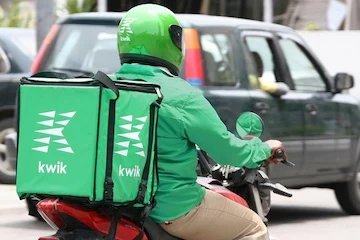
In Lagos, for example, Kwik, an on-demand courier, deploys independent motorbike riders who can weave through traffic and congestion that would trap a delivery.
Similarly, Loop in South Africa is developing software that dynamically adjusts routes for third-party fleets based on real-time traffic.

Kwik deploys motorcycle riders in Lagos, Nigeria to weave through traffic and obstacles. Photo: Kwik.
Deliver in bulk to intermediaries. Delivering bulk goods to well-known, informal retailers, rather than individuals, allows couriers to leave 50 items in one place (store) instead of 50 trips to customers.
Anticipate failures. Implementing “pre-failure” controls and contingency tools for drivers can prevent minor friction points from escalating into failed deliveries.
For example:
- “Cash floats” protect cash on delivery income. Delivery provider Glovo mandates that drivers carry pre-counted small bills, preventing failed deliveries due to an inability to provide change.
- Verify first. Loop uses automated WhatsApp flows to contact the customer before the driver leaves the center. If the customer does not confirm availability, the system flags the order to avoid a wasted trip.
New manual
Consumers in Africa are concentrated and affordable. The Big Four markets in Nigeria, Egypt, South Africa and Kenya control almost 70% of seed capital.
But capital alone cannot fix the “lack of trust” or pave the way. E-commerce winners in Africa are adapting to hyperlocal challenges for profitable sales.