
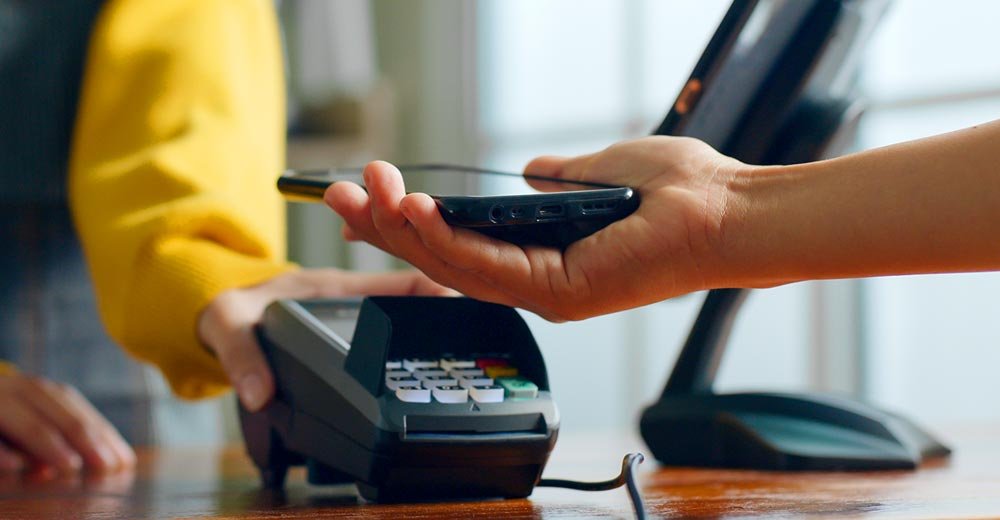
Customer acceptance of mobile wallets is firmly established. What started as a convenient way to pay has expanded into a broader relationship of trust as consumers increasingly rely on digital wallets for loyalty programs, offers and store credentials—and now their most sensitive credentials: their IDs.
With the majority of U.S. adults already using platforms like Apple Pay and Google Wallet, digital ID represents the latest step toward eliminating physical wallets filled with plastic ID cards, loyalty cards, credit cards, and driver’s licenses.
Alex Campbell, co-founder and chief innovation officer at Vibes, provider of the Vibes mobile engagement platform, calls this shift much more than a technology upgrade, describing it as a tipping point for mobile engagement.
“If identity lives in the wallet, loyalty naturally follows without the need to download an app,” he told the E-Commerce Times.
Retailers that have adopted a wallet-centric loyalty strategy will now gain a significant competitive advantage as platform usage accelerates toward 2026, he predicted.
Apple’s digital ID is changing consumer behavior
Digital wallet adoption continues to accelerate in the US. Total users have increased by 57% since 2024, underscoring how quickly wallets have moved from optional convenience to everyday infrastructure.
Apple Pay has been a major driver of this growth, with analysts reporting more than 65 million active users in the US by 2025 – nearly half of the mobile wallet market. This benchmark gives Apple Wallet immediate leverage over its digital ID feature introduced in early November 2025.
Digital ID allows users to securely add U.S. passport information to an iPhone or Apple Watch for in-person verification at TSA checkpoints and other approved locations. This feature builds on Apple’s earlier support for digital driver’s licenses introduced in 2022.
Generation Z and Millennials are the driving force. More than 73% of Gen Z digital wallet users rely on Apple Pay for weekly payments, signaling habitual engagement that digital ID integration is likely to deepen.
Finder.com and Statista estimate that Google Wallet has around 200-250 million users worldwide, up from around 150 million in 2022. In the US, Google Wallet remains a significant competitor, although its adoption still lags behind Apple Pay.
mDL will encourage more adopters
The adoption of mobile driver’s licenses (mDLs) in the US is accelerating as more states pass laws that allow residents to store digital licenses in Apple Wallet and Google Wallet. By the end of 2025, an estimated 19 to 30 states had live programs or pilots in place.
This established habit laid the groundwork for what marketers increasingly see as the next mobile frontier: identity. Apple’s November 2025 launch of enhanced digital ID features is a key step to reduce reliance on physical wallets to carry credentials.
About 76% of Americans now live in states that have adopted or are piloting mDL programs, signaling that state-sponsored digital identity infrastructure is nearing mainstream reach.
By the end of 2025, 15 states plus Puerto Rico will fully support adding driver’s licenses or state IDs to Apple Wallet. Google Wallet also supports mDL and government IDs in select US and UK states, although physical IDs are still commonly recommended with digital wallet apps.
The dominance of smartphones – with roughly 91% ownership compared to 53% passport use – is helping to drive the shift. As wallet functionality expands beyond payments and loyalty cards, digital identity becomes a secure, privacy-focused tool for everyday use, not just travel.
Getting started brings challenges
A patchwork of legal, technical and practical obstacles continue to hinder digital ID adoption, Campbell warned. Different state laws and admissions rules mean that a credential accepted in one state may be denied in another.
Campbell explained that inconsistent technical standards and issuer practices complicate interoperability between iOS and Android wallets and authentication systems. Widespread adoption also requires costly upgrades to NFC readers, law enforcement and airport workflows, and employee training.
Privacy and trust concerns about who verifies and stores identity data remain unresolved. Robust security, revocation and recovery processes are also essential.
“Equitable access must be ensured for those who do not have compatible devices,” he said.
Securing shoppers, increasing store convenience, online sales
According to Campbell, it represents a long-term vision of touch authentication technology based on Near Field Communication (NFC) – rather than QR codes. NFC is more secure and harder to counterfeit, but requires verifiers such as law enforcement, TSA agents, retailers and delivery drivers to deploy NFC-enabled readers and updated workflows.
“Security is generally stronger on phones due to tokenization and device-level biometrics, but privacy and trust issues remain around who is doing identity verification and what data is being shared,” he said.
Campbell emphasized that retailers and brands share a common business goal. Combining wallet functionality with messaging can increase in-store traffic, increase offer redemptions, and improve loyalty program engagement while reducing certain fraud vectors.
He sees the widespread use of digital wallets as a way to solve the persistent problems of brick-and-mortar merchants, bridge the convenience of online shopping and bring customers into stores where further purchases are made.
When shopping online, retailers and brands miss the opportunity for consumers to walk into a store and buy one item—and end up buying three or four more products. The goal is to draw shoppers into stores where they can browse and discover more.
“So we’re moving a lot of our brands toward using wallets to drive that traffic,” he said.
Win-Win combination for better business
According to Campbell, digital wallets and texting work effectively together as a retail marketing strategy. Merchants can send coupons, offers or loyalty card benefits to consumers in their databases directly through messages.
“We’ve integrated the wallet into our overall platform. On the messaging side, you can also send messages directly to the wallet. On average, we’ve seen about a 26% increase in payouts when it’s done effectively,” Campbell said.
He noted that while e-commerce is gaining attention, it still represents only a fraction of the total trade.
“Merchants are concerned with engaging their customers in ways that lead to repeat visits and incremental purchases,” he said.