
As AI insights and buying agents drive away organic traffic, ecommerce marketers may turn to advertising for predictable growth in 2026.
Artificial intelligence is changing the way people discover, evaluate and buy products. It may be early days, but the pace of change is accelerating.
For example, in an October 2025 Harvard Business Review survey, 74% of US adults aged 18-30 had used an AI chatbot in the previous month. That’s up from 58% of young adults in the February 2025 survey.
Hearing
Search engines are increasingly answering questions in the results. Shopping agents compare products before a customer visits a website. The result is declining organic traffic.
Every industry seems to be experiencing what could be a once-in-a-generation change in how it operates.
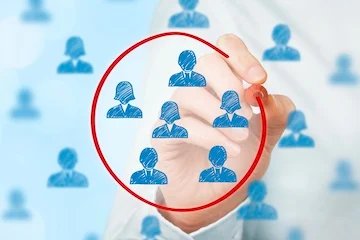
Yet the same AI tools creating disruption also offer opportunity. As organic traffic becomes less reliable, ad targeting becomes more valuable and audience intelligence becomes a competitive advantage.
For e-commerce, optimized targeting can regain predictability.
But marketers aren’t limited to retargeting their own customers or even lookalike audiences.
Marketers can buy pre-built audiences based on purchasing behavior, device usage, location history and other signals and then activate those same audiences across major advertising platforms, including social, programmatic display, connected TV and video.

Better ad targeting can significantly improve performance.
4 Tactics
Besides demographics
Moving beyond demographics can be the first step to audience and advertising optimization.
“There are standard audience segments that have been around forever, like age, gender and interest, but we find a lot of our more interesting data sets in purchase history, what we call the purchase graph,” explained Mike Ford, CEO of predictive audience company Skydeo.
This optimization is simple enough: target consumers who have recently purchased adjacent products, perhaps from competitors or in similar product categories.
Targeting buying signals – transactional data – can certainly be more expensive than broad demographic targeting. However, these audiences often convert at significantly higher rates, which can more than offset the higher costs.
Manual selection of attributes
The second way to target audiences is to manually select attributes, or at least understand similar ones, adding human intelligence to the algorithmic mix.
Lookalike modeling is often obscure, hidden in the platform or in the provider’s systems.
Instead of uploading a list of customers and relying solely on an algorithm, marketers can create audiences based on explicit characteristics. Examples include buyers of premium dog food or people who have installed fitness apps and purchased sportswear.
Restore
Another optimization tactic is to regularly update your audience.
“Sometimes audiences get stale. Sometimes they run out of time and we have to refresh them,” Ford said.
Many marketers think of audiences as static assets. They are built once and reused indefinitely. This approach becomes ineffective when the purchase intention is sudden and short-term.
Treat high performing audiences like creative advertising. Rebuild or refresh audiences regularly. Ask platforms or vendors for audience updates. Choose daily or weekly refresh cycles where possible.
Take advantage of AI
The fourth audience targeting optimization that Ford recommended was to leverage AI.
Ford Skydeo and many other data companies such as Adstra, Starcount or AlikeAudience have huge amounts of targeting data and established, off-the-shelf audiences.
Instead of searching through taxonomies, eCommerce marketers can review, test and validate machine-ranked audiences. AI offers possibilities. People decide what to keep.
This does not undermine the idea of hand-picking audience attributes or requiring some level of algorithmic transparency. Rather, it is the idea of using AI not to replace human knowledge, but to accelerate it.
Transport in 2026
When traffic is plentiful, marketers can afford inefficiencies. When transportation is limited, waste is a problem.
Optimizing audience targeting doesn’t solve every problem with AI-driven product discovery. However, it can improve the effectiveness of advertising. And advertising is among the best ways to market in 2026.