
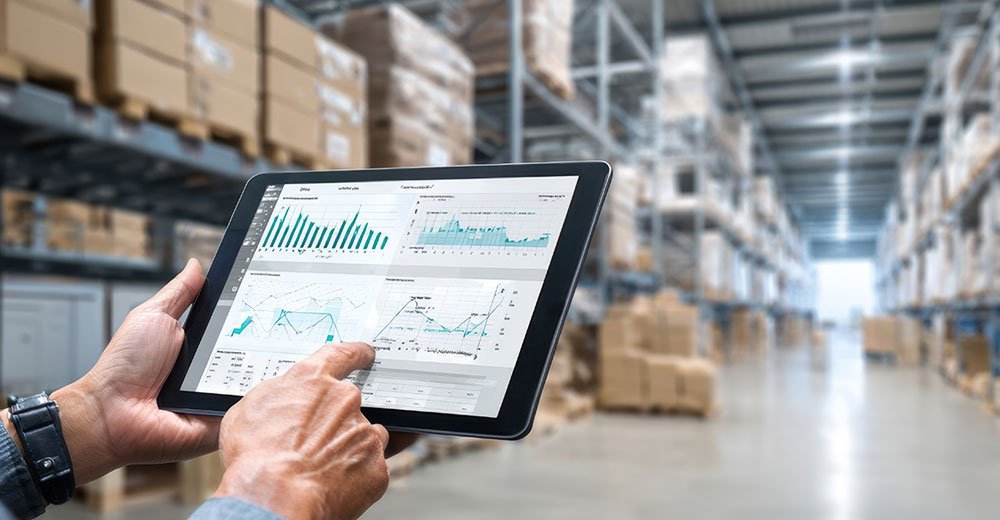
The one-size-fits-all approach of legacy enterprise resource planning (ERP) systems continues to frustrate midmarket retailers, where low margins leave little room for slow or rigid software.
Most traditional ERP platforms were designed for large enterprises and pushed SMEs into systems that are too complex, expensive and difficult to customize.
As a result, many smaller retailers feel they lack the capacity to manage multiple information and communications technology (ICT) vendors, contracts and licenses while still protecting their business from new challenges.
Morgan Browne, founder and CEO of Enterpryze, sees the ERP industry as broken and often left behind. He believes the answer is automation systems built for small and medium-sized businesses (SMEs) that are simple, practical and designed to enable growth rather than stifle it.
ERP software helps SMB retailers centralize inventory, sales, and finance into a single system, increasing efficiency, reducing costs, and enabling data-driven decision-making. It also provides operational context that streamlines customer relationship management (CRM) and helps prevent lost sales due to incomplete or delayed information.
“The ERP industry’s slow shift toward SMBs is not so much about a single constraint, but rather a combination of legacy business models and legacy technologies that reinforce each other,” he told the E-Commerce Times.
Big building and the limiting root causes of architecture
According to Browne, the top three requirements for an effective and purpose-built ERP for SMBs are ease of use, rapid deployment and a service-free, cloud-native platform. As a cloud-native solution rather than an on-premise ERP platform, it offers automatic monthly updates with no downtime, minimal maintenance and no disruption. This type of ERP allows businesses to run smoothly throughout the year.
He sees the contrast as similar to the shift from VHS to Netflix. Why invest in purchasing, maintaining and upgrading outdated systems when businesses can instead subscribe to a cloud-native service that is constantly evolving and improving?
“For companies outgrowing basic financial tools or juggling fixed systems for CRM, inventory and operations, an ERP platform must enable real-time visibility for full control over inventory, cash flow and customer interactions,” he explained.
From a business model perspective, major ERP providers serve large enterprises with large budgets, long sales cycles, and highly customized deployments. SMEs fundamentally question this model. They expect fast time to value, predictable pricing, minimal consulting and software that works without dedicated IT teams.
“Profitable service to small and medium-sized businesses requires less implementation effort, standardization and automation,” countered Browne.
Why Legacy ERP Still Fails SMBs
Established ERP platforms were originally designed for on-premise environments, demanding customization and single-tenant deployments. These systems are inherently complex to implement, difficult to update and expensive to maintain, Browne noted.
Retrofitting them for SMBs involves removing features rather than rethinking usability, speed and automation from the ground up. As a result, platforms offering lighter versions of enterprise systems still carry enterprise complexity.
Browne said legacy systems that migrate to cloud ERP essentially replicate the same architecture in the cloud without rethinking core design elements such as real-time scalability and ease of deployment. This architectural transfer explains why truly cloud platforms are important to SMBs, rather than simply moving legacy complexity to the cloud.
“Platforms like Enterprise, built natively for the cloud from day one, take a different approach: multi-tenant architecture, continuous updates, API-first integration, and automation designed into the core,” he explained of how his company alleviates ERP pain for SMBs.
Rather than adapting enterprise systems downward, cloud-native ERP rethinks financial and operational workflows to reflect the reality of SMB scale, delivering simplicity, speed and resilience without sacrificing capabilities.
Broken ERP ecosystems Fragment SME IT
Browne suggested that a “broken” ERP ecosystem is one of the main reasons why SMEs end up drowning in ICT vendors, licenses and disconnected systems. ERP platforms thrive on large enterprises with deep pockets, long planning cycles and dedicated IT teams. When those same systems are pushed down to SMEs, they don’t fit.
“The result is fragmentation by default,” he said.
It creates a “complexity tax” that shows up as obvious costs: multiple subscriptions, integration fees, consultants, and ongoing support. But the hidden costs are far more damaging to growth.
For example, data becomes cloudy and inconsistent, forcing teams to spend time comparing numbers instead of acting on them. Decision-making slows because leaders no longer trust real-time visibility of inventory, cash flow and customers. As a result, errors multiply and silently erode profitability.
“Because traditional ERP is too expensive, too slow to implement and too complex for most SMBs, many businesses put off adopting a single integrated system. Instead, they stitch together multiple point solutions, such as one for accounting, another for inventory, another for CRM, spreadsheets to fill in the gaps, and manual processes to tie them all together,” said Browne.
Each tool adds another vendor, another license, another login, and another integration to manage. The ecosystem is fragmenting not because SMEs want it to, but because the basic ERP system that should unify operations is unavailable to them, he added.
When traditional ERP fails under pressure
Browne offered a real-life scenario in which a traditional ERP failed in an e-commerce business during a sudden change in the supply chain. A mid-sized e-commerce retailer faced a sudden supply chain disruption that delayed deliveries by six weeks.
This meant quickly adjusting purchasing strategies, switching to alternative suppliers and recalibrating inventory levels. In a legacy ERP environment, the service model becomes a bottleneck. These systems require personalized implementation and customization.
The vendor’s business model depends on consulting services and ongoing support. She needed urgent changes, such as new vendor codes, adjusted order points, or expedited workflows, which she could not implement herself. Instead, it had to wait for the vendor’s services team to prioritize the request, implement the change, and deploy it.
In a crisis where cash flow was tight and every week of delay cost money, the addiction was crippling. By the time the vendor’s team made the necessary adjustments, the business had already lost market share to competitors with more agile systems and was spending money on consulting fees just to keep operations running.
“A cloud-native, automated ERP allows a business to adapt instantly, make changes themselves, deploy updates immediately, and stay resilient without waiting for outside vendors,” explained Browne as a solution.
Why automation is changing how ERP works
Browne described how an e-commerce owner is affected differently by a control system and an automation system. There is a difference between knowing what happened and the system actively managing a trade with you.
A traditional management system primarily records data, captures orders, invoices, inventory movements and bank transactions and then presents them in reports or dashboards. The automation system, on the other hand, is focused on action. It doesn’t just store information. It uses AI-driven logic to trigger results.
In the context of e-commerce, this means that businesses can generate purchase orders automatically based on demand signals, inventory levels and sales velocity. Bank transactions are matched and reconciled without manual intervention. Invoices are intelligently scanned, verified and posted. Potential errors such as pricing anomalies, duplicate invoices or unusual spending patterns are flagged automatically, not weeks later.
The rise of technologies like ChatGPT has fundamentally shifted expectations. Business owners now expect systems to understand context, provide real-time information and reduce manual effort across all functions, Browne noted.
“Artificial intelligence ERP platforms contain this intelligence at their core, enabling features such as demand forecasting, inventory optimization and predictive cash flow insight,” he concluded.